Traditional Tattooing in the Heart of Downtown San Luis Obispo
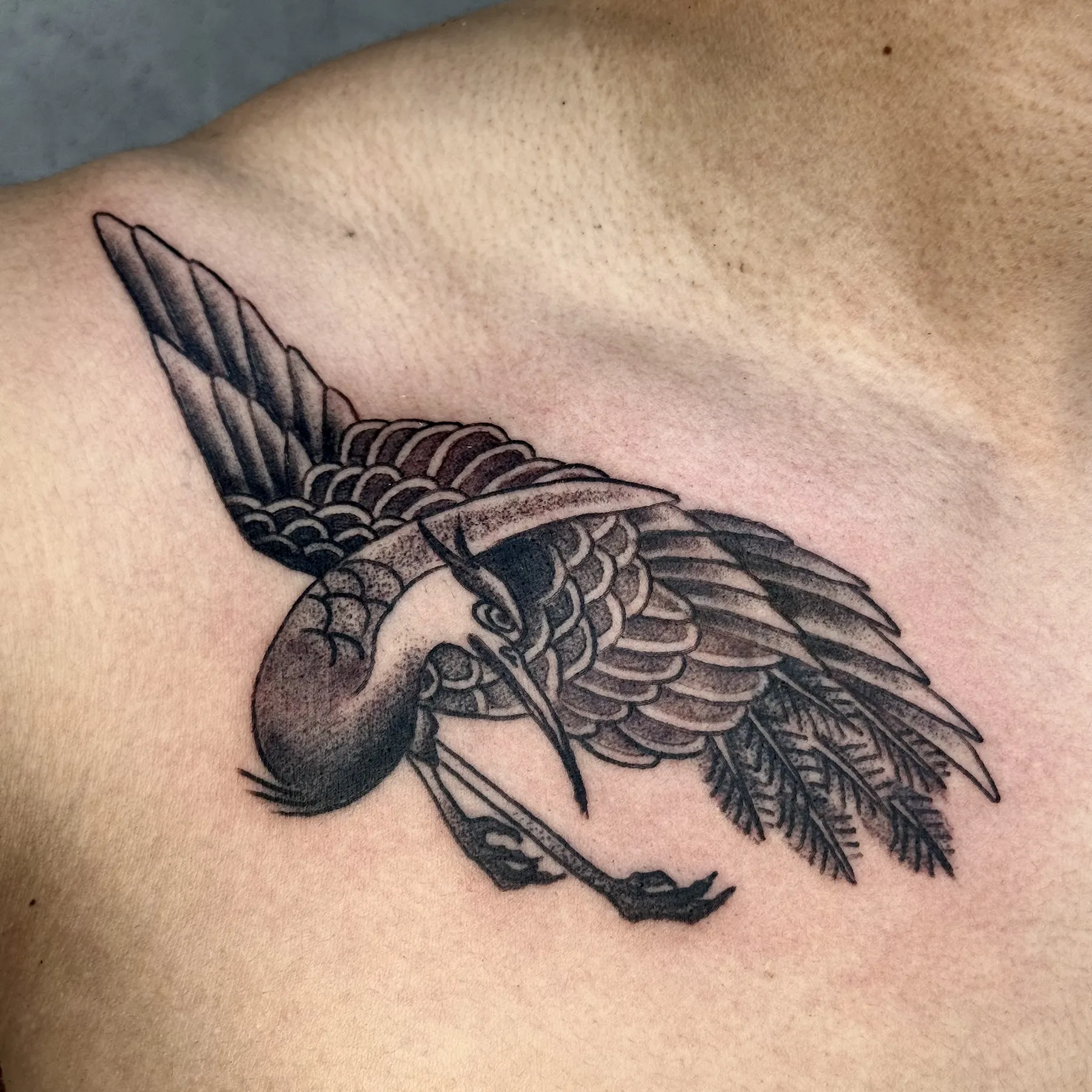
Selected works,
2020 — 2026.
2020 — 2026.
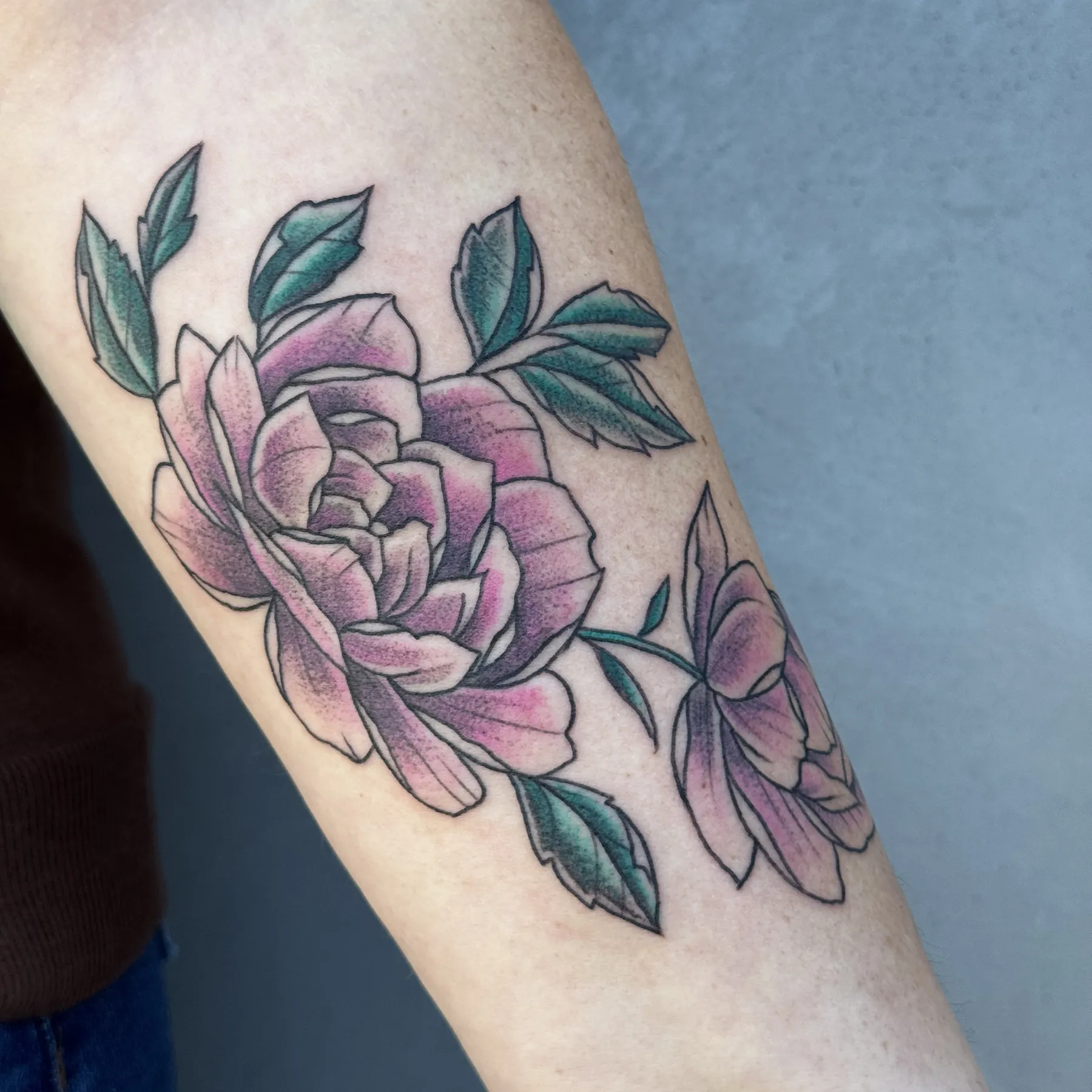
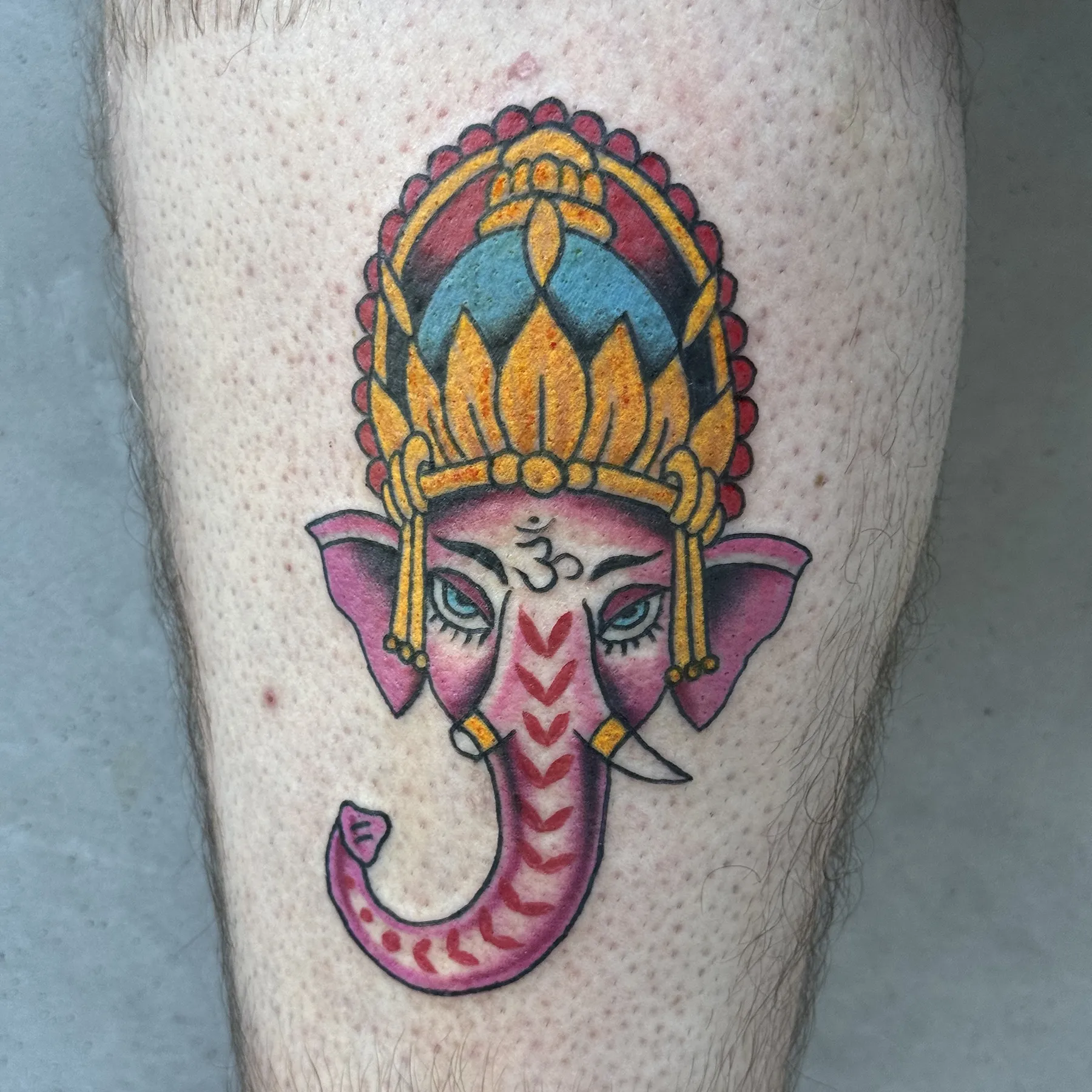
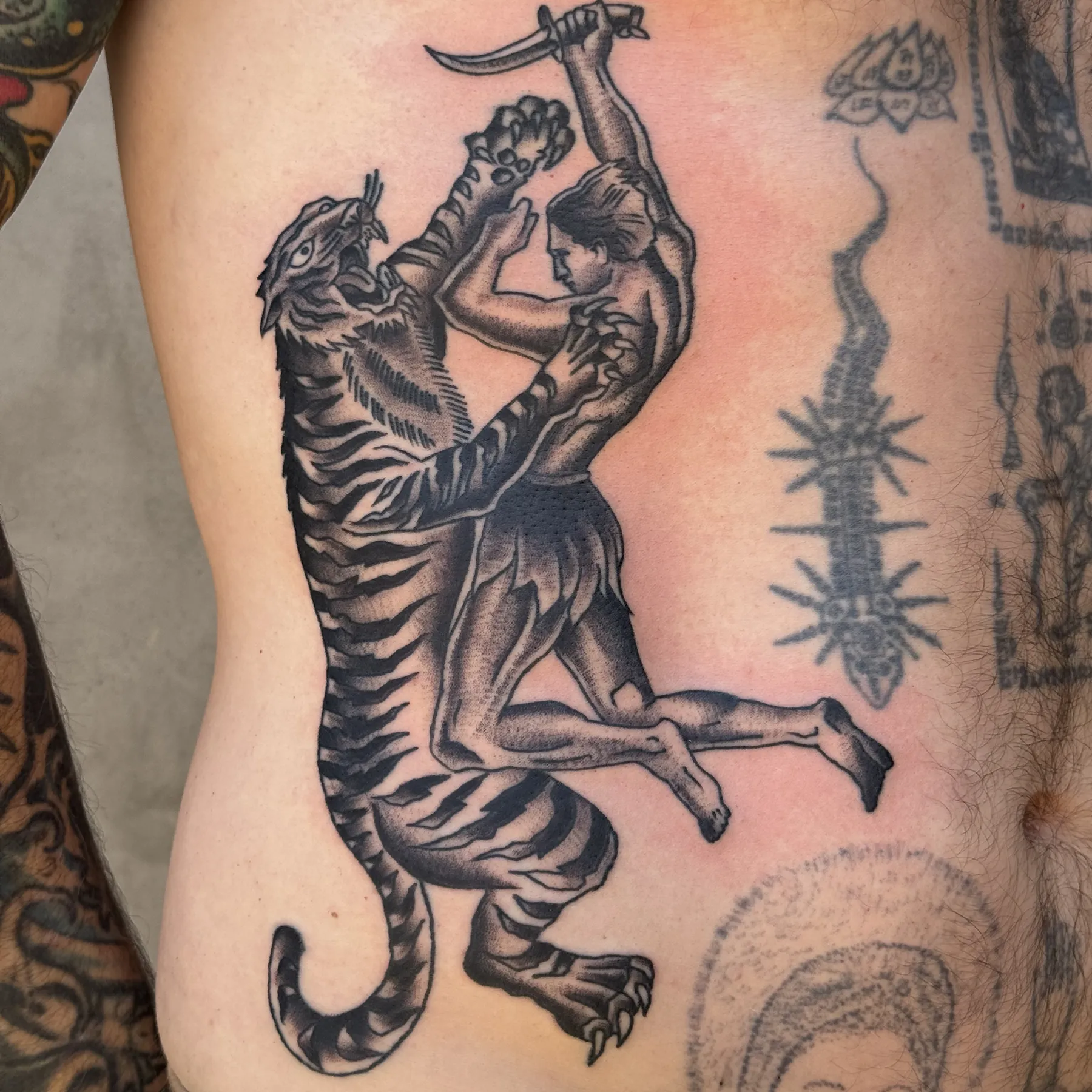
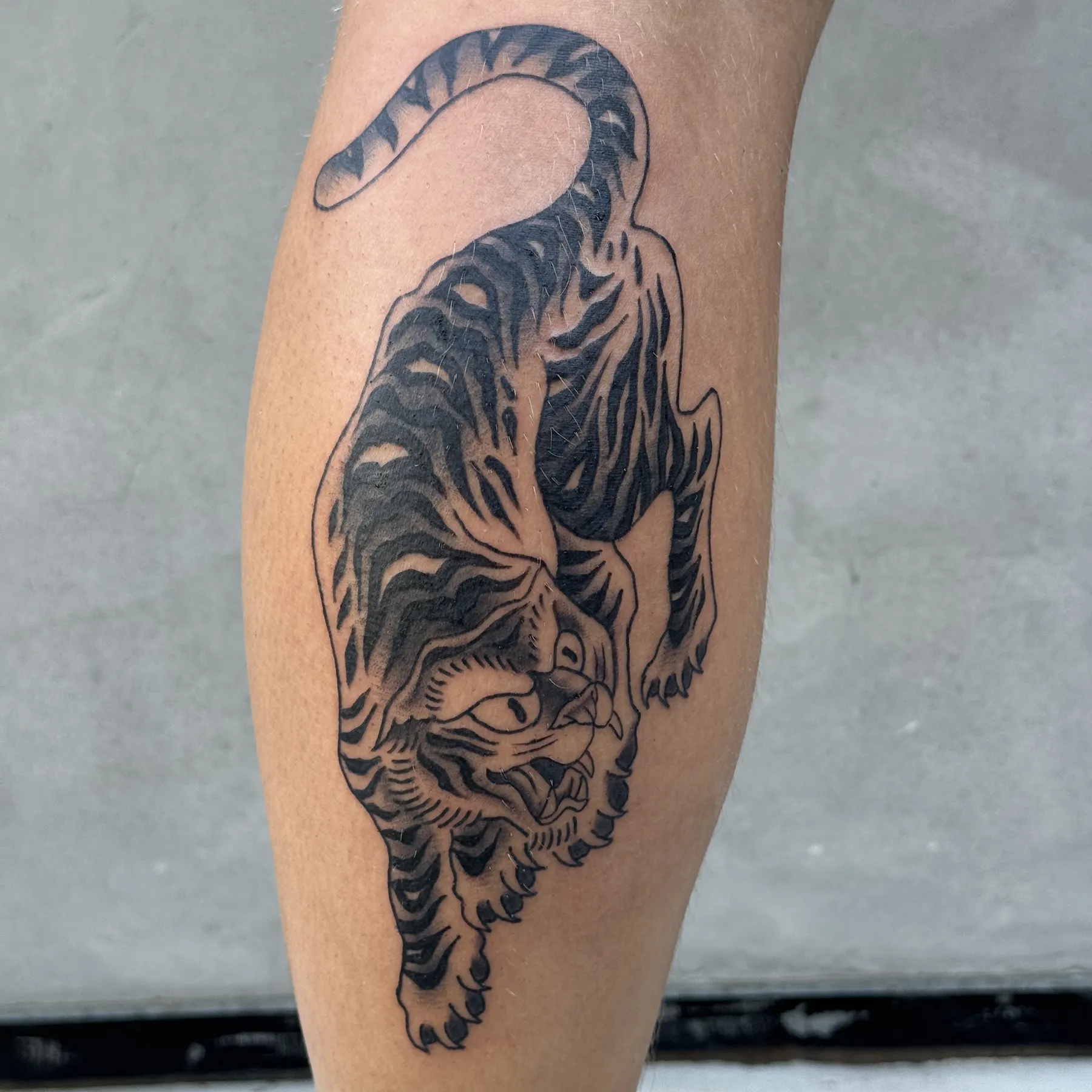
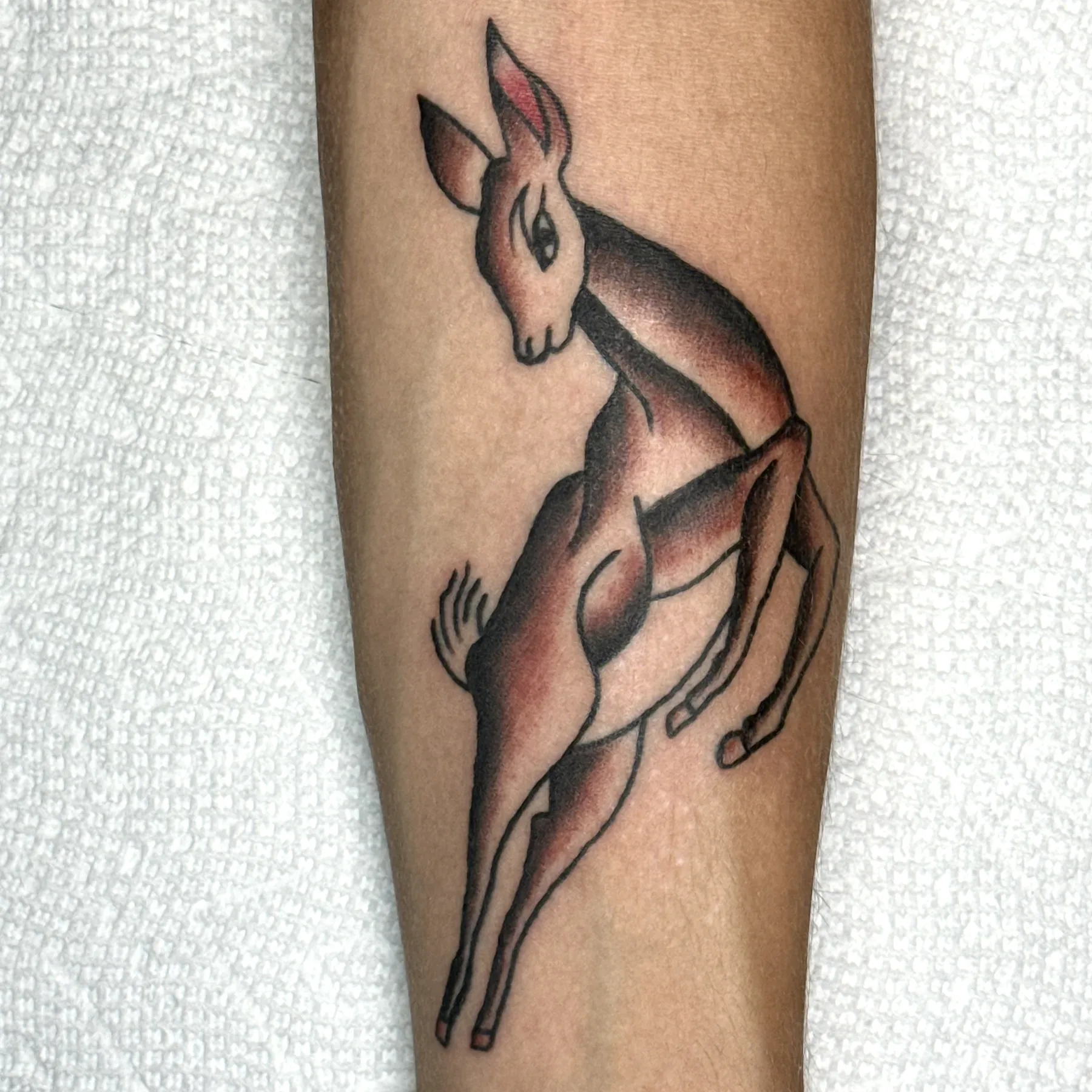
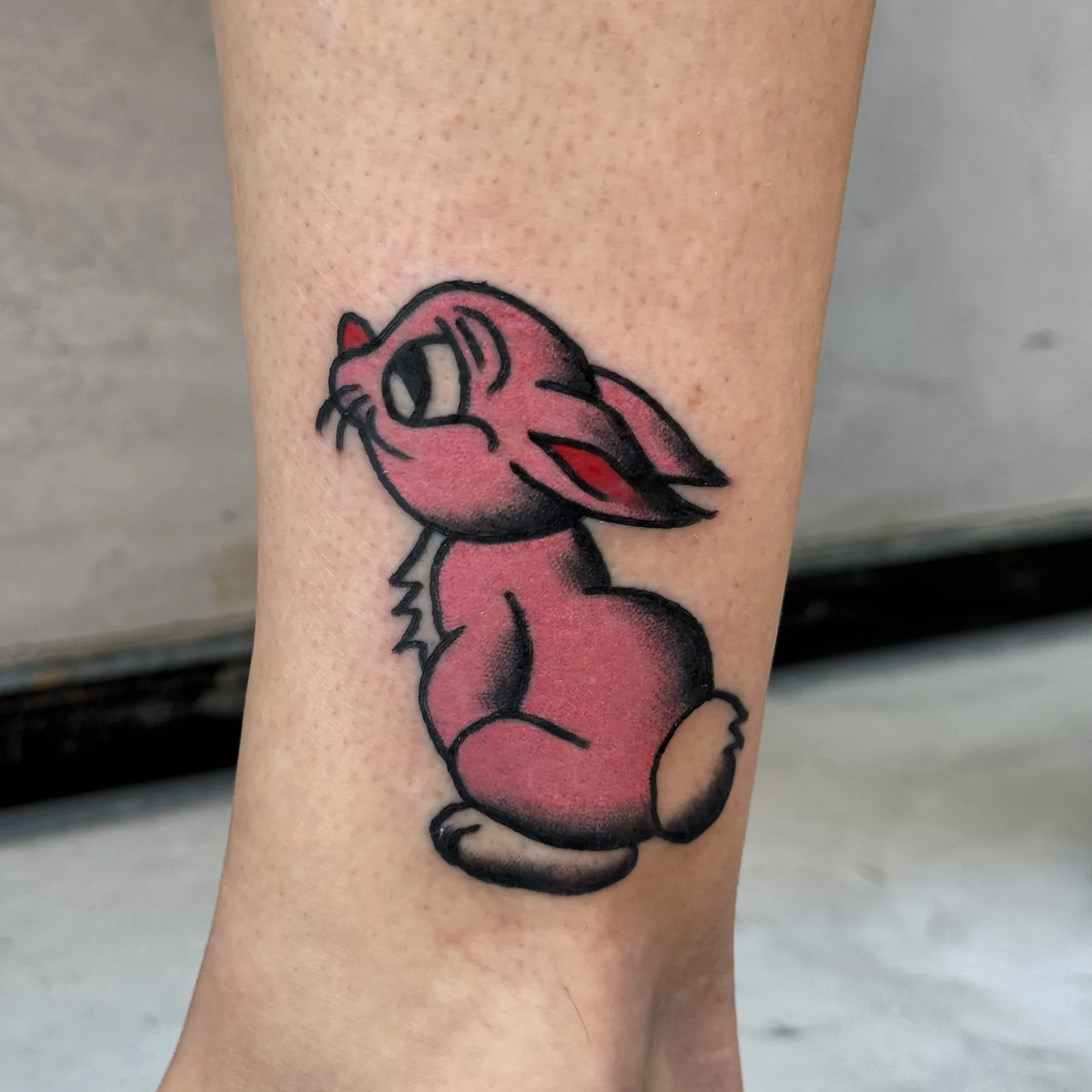
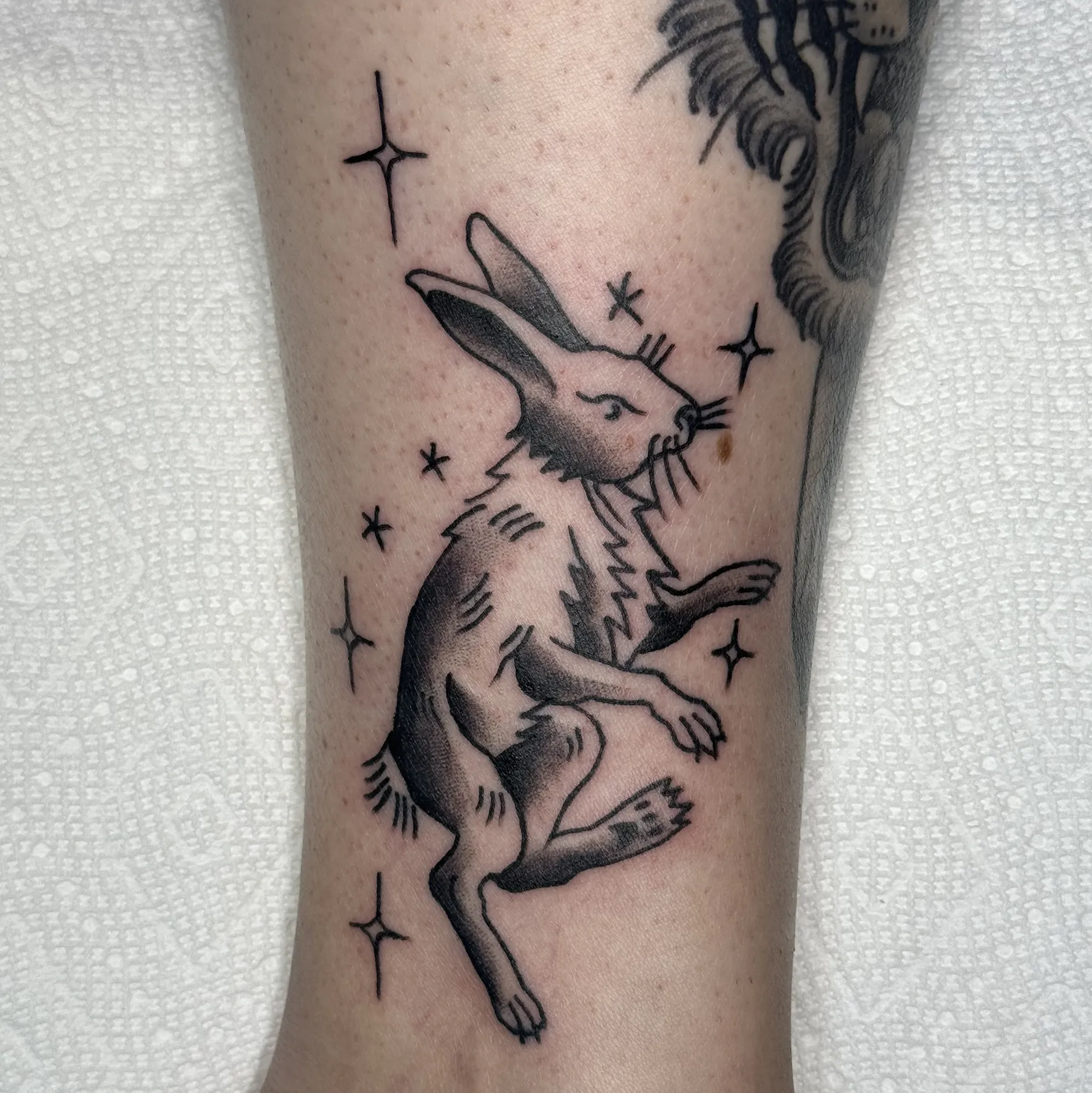
01 - KEEP IT COVERED - Leave the bandage or wrap on for 2–4 hours or overnight as directed by your artist.
02 - DON'T REBANDAGE - Do not rebandage your tattoo or apply "second skin" at any time.
03 - WASH GENTLY - Remove the wrap and wash your hands, then wash tattoo with warm water and "Orange Dial" or fragrance-free soap such as Dr. Bronner's.
04 - DRY - With clean hands and a clean, fresh paper towel, gently pat dry your tattoo. Do not rub or scrub the tattoo. Do not use a fabric bath or hand towel.
05 - MOISTURIZE - With clean hands, apply a thin layer of Aquaphor Ointment after pat drying. Less is more. After 4–5 days as tattoo begins to dry and have flaky skin, switch to an unscented, plain white lotion such as Lubriderm, Eucerin, or CeraVe.
06 - DO NOT PICK - Do not pick or scratch your tattoo. Do not scrub tattoo with washcloth or towels. Be gentle, so as not to disrupt the skin's natural healing process.
07 - AVOID SUN - Avoid sun exposure. Keep the tattoo out of direct sunlight for at least 3–4 weeks while healing. Do not apply sunscreen during this period.
08 - NO SOAKING - No soaking or swimming. Skip baths, pools, hot tubs, and the ocean until fully healed. (2 weeks minimum).
09 - LOOSE CLOTHING - Wear loose clothing. Avoid tight fabric rubbing against the tattoo, especially in the first week.
10 - MONITOR YOUR TATTOO - Watch for infection. Redness, swelling, or discharge beyond day 3? See a doctor promptly.
11 - ENJOY - Congratulations! Enjoy your new tattoo. Care for it properly during this initial healing period and it will last you a lifetime.
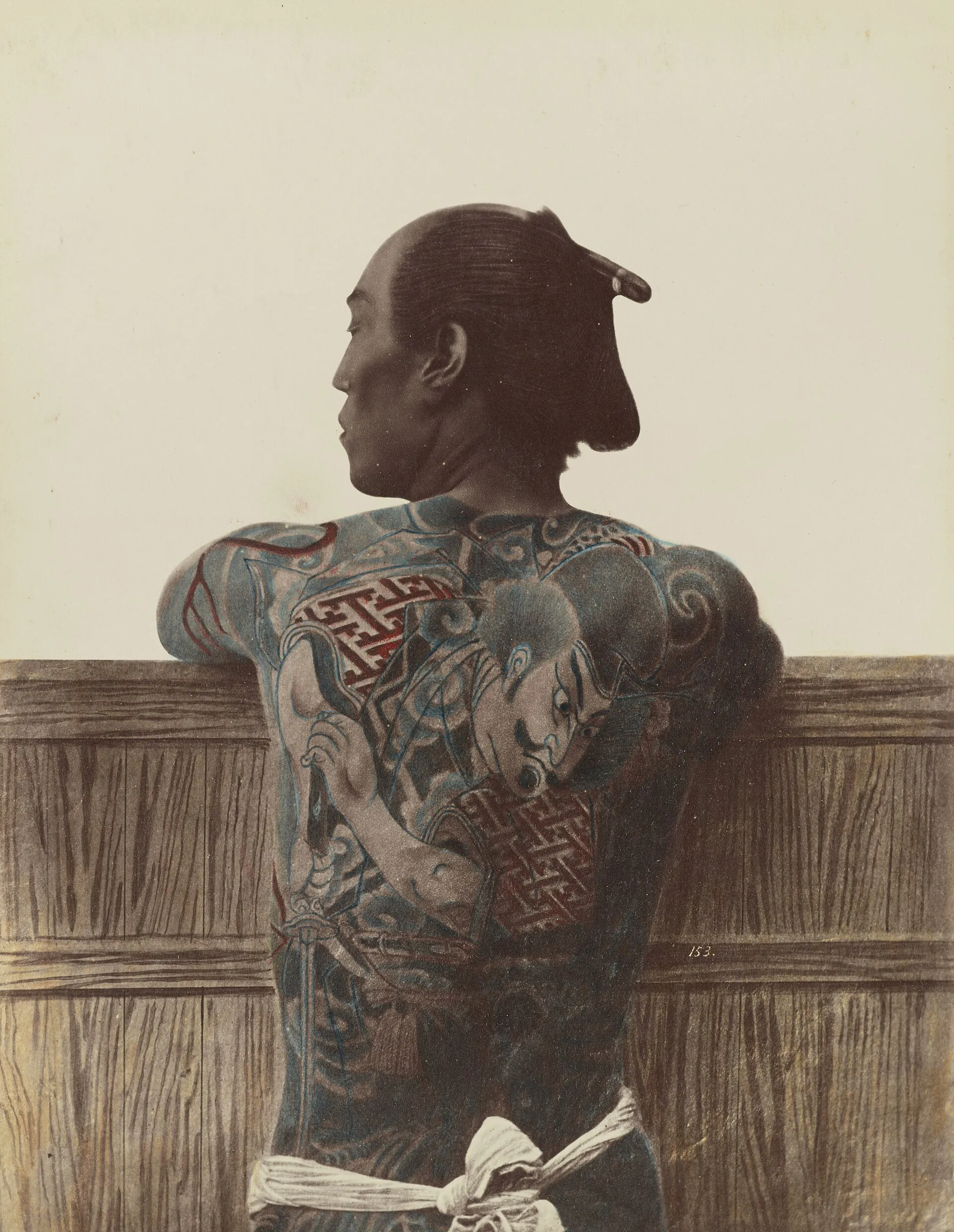
The word irezumi (入れ墨) literally means "inserting ink." It is both the Japanese term for tattoo in the broadest sense and, in international usage, a reference to a specific, highly codified tradition of full-body decorative tattooing that emerged from Edo-period Japan. To understand irezumi is to understand a living language — one spoken not in words, but in dragons, waves, peonies, and the careful architecture of skin.
The roots of tattooing in Japan are ancient. The Gishi-wajin-den, a third-century Chinese Wei dynasty account of the Japanese archipelago, describes tattooing practices among the early Japanese people used for tribal identification and religious purposes. The Ainu, Japan's indigenous people of the north, used tattoos as spiritual protection against evil spirits. But the decorative tradition we recognize as irezumi today traces its lineage to approximately 300 years ago, to the mid-Edo period (1603–1868), when criminals bore tattooed marks as punishment. Former prisoners sought out specialist artists — irezumi-shi — to conceal those marks beneath elaborate floral designs. From concealment grew art. From art grew an entire visual grammar of the body.
Irezumi 入れ墨 / 刺青 — The primary term for Japanese tattooing. Written 入れ墨 (inserting ink). In English usage, "irezumi" typically refers to the large-scale, narrative, full-body tradition distinct from Western style tattooing.
Horimono 彫り物 — Literally "carved thing" or "decorative carving." The term used specifically for the high art of full-body or large-scale decorative tattooing. Where irezumi may broadly describe any Japanese tattoo, horimono implies artistic intent and compositional integrity — the body treated as a unified canvas.
Wabori 和彫り — "Japanese-style carving." Used to distinguish traditional Japanese tattooing from Western-influenced styles. A term of cultural specificity favored within Japan.
Bunshin 文身 — "Patterning the body." An older synonym for irezumi, emphasizing the decorative transformation of the human form.
Shisei 刺青 — "Piercing with blue." An alternate reading and writing of irezumi, emphasizing the color and technique.
Horishi 彫師 — A master tattoo artist. The prefix hori (彫) means "to carve," and is used in the professional names of all traditional irezumi masters — Horitoshi, Horiyoshi, Horizakura, Horimitsu, and so on. The title is earned, not assumed; it is typically conferred by a master upon a student as an acknowledgment of sufficient mastery.
Irezumi-shi 入れ墨師 — An older term for a tattooing specialist. Historically applied to the craftsmen who covered prisoners' punishment marks with decorative tattooing in the Edo period — the functional origins of the art form.
Shu-ha-ri 守破離 — The three-stage philosophy of traditional Japanese craft learning. Shu: preserve and absorb the master's tradition completely. Ha: begin to break from it and find one's own expression. Ri: transcend both to become an independent master.
Tebori 手彫り — "Carving by hand." The traditional method of irezumi application using a wooden or metal handle with needles attached by silk thread, driven into the skin by hand rather than by machine. Tebori produces a distinctly different result from machine work: the ink sits in the skin at a slightly different angle, creating softer gradations, richer saturation, and a quality that experienced artists describe as appearing "alive" in the skin.
Nomi 鑿 — The chisel-like tool used in tebori. The term comes from woodworking — the same word used for the carving tools of ukiyo-e woodblock print artisans. The connection is not coincidental; irezumi and woodblock printing share a visual lineage and the physical vocabulary of carving.
Yobori / Yo-bori — Machine tattooing. Used within the irezumi world to distinguish electric tattoo machine work from traditional tebori. Many contemporary horishi use machines for outlines and tebori for shading and color.
Sumi 墨 — Traditional Japanese black ink, the same ink used for calligraphy and sumi-e painting. High-grade sumi is ground from sumi sticks and mixed by hand. The color it produces in the skin — especially as it ages — has a warmth and depth that synthetic blacks do not replicate.
Gakubori 額彫り — Background tattooing. The waves, clouds, wind bars, rocks, and flames that surround and support the central figures in a composition. Gakubori is not filler — it is the narrative environment that gives motifs their meaning, movement, and season.
Nukibori 抜き彫り — Tattooing without a background. A single motif rendered against bare skin. A legitimate approach but considered a different aesthetic register from full gakubori composition.
Mikiri 見切り — The "closing line" — the edge where background tattooing ends. The design and placement of the mikiri determines how the garment-like quality of a bodysuit is expressed.
Traditional irezumi is conceived in terms of garment — the tattoo understood as clothing worn beneath the skin. The vocabulary for bodysuits mirrors the vocabulary for Japanese dress.
Sōshinbori 総身彫り — Full body suit. Complete coverage from neck to ankle and wrist on all sides.
Munewari 胸割り — "Split chest." A full bodysuit that leaves an untattooed vertical strip running down the center of the chest and abdomen, mimicking the open front of a traditional Japanese workman's coat. This is the most classic and recognizable bodysuit format in traditional irezumi.
Senaka 背中 — The back. The foundation of any traditional bodysuit. As the largest single viewable canvas on the human body, the senaka houses the central compositional motif and establishes the design's season, story, and spirit.
Hikae 控え — Chest panel. The extension of the sleeve design onto the chest and shoulder.
Nagasode 長袖 — "Long sleeve." Full arm coverage from shoulder to wrist. The benchmark sleeve length in traditional irezumi.
Shichibusode 七分袖 — "Seven-tenths sleeve." A sleeve ending below the elbow — approximately three-quarter length.
Gobusode 五分袖 — "Five-tenths sleeve." A half-sleeve ending above the elbow.
Traditional irezumi draws from a closed canon of imagery rooted in Japanese and Chinese mythology, history, literature, and nature. The most significant motifs include:
Ryū 龍 — Dragon. The supreme symbol of wisdom, power, and protection in East Asian tradition. Unlike Western dragons, the Japanese ryū is a benevolent celestial force associated with water, rain, and transformation.
Koi 鯉 — Carp. Symbol of perseverance and transformation, drawn from the Chinese legend of the koi that ascends the Dragon Gate waterfall and becomes a dragon.
Botan 牡丹 — Peony. The king of flowers in Japanese and Chinese iconography. Represents wealth, beauty, and good fortune.
Sakura 桜 — Cherry Blossom. Transience and the beauty of the ephemeral. One of the season-markers that anchors a composition in spring.
Oni 鬼 — Demon. A fearsome supernatural being from Japanese folklore. In irezumi, oni often serve as protective figures or moral symbols.
Tengu 天狗 — Mountain spirits combining human and bird features, associated with martial arts and esoteric wisdom.
Tennyo 天女 — Celestial maidens of Buddhist and Shinto tradition. Graceful, flowing figures associated with enlightenment and divine beauty.
Fūjin and Raijin 風神 / 雷神 — The gods of wind and thunder. Often depicted as a complementary pair, they appear frequently as guardian motifs flanking a back piece.
Suikoden Heroes 水滸伝 — The 108 outlaw heroes of the classical Chinese novel The Water Margin, depicted with full-body tattoos by ukiyo-e artist Utagawa Kuniyoshi in the early 19th century. This woodblock print series is the direct ancestor of modern irezumi as decorative art.
Sources: Tokyo Journal (interview with Horitoshi I by Dr. D. Vice); Tokyo Journal (interview with Horiyoshi III); Inkers Magazine (interview with Horimitsu); Horizakura biography via Raking Light Projects; Wikipedia — Irezumi; Wikipedia — Horiyoshi III; Horisumi.com (Kian Forreal); Acala Tattoo Collective; Authentink.com; Japambience.com; Luca Ortis — "Irezumi or Horimono?"; Flickr documentation of Horizakura tebori work.
![[ Add description — e.g. Don Ed Hardy tattoo artwork or portrait ]](images/blog/blog-03.webp)
By the time Don Ed Hardy retired his machines in 2009, he had done something that would have seemed impossible in the shadowy world he entered as a young man: he had transformed tattooing from a marginalized folk art into a recognized fine art form, weaving together the traditions of the American old school with the ancient craft of Japan, and bringing both to the light of mainstream culture.
Donald Edward Talbott Hardy was born in Des Moines, Iowa in 1945 and grew up in Corona del Mar, in Newport Beach, California. He was drawn to tattoos almost before he could articulate why. As a boy of ten, he began cycling down to The Pike in Long Beach — a rough-and-tumble amusement pier where sailors, drifters, and adventurers mixed freely — to watch the legendary Bert Grimm work. Grimm's studio, "World Famous Tattoo," was one of the great institutions of American traditional tattooing, a temple to the bold lines, primary colors, and archetypal imagery — eagles, panthers, anchors, roses — that had defined the craft for generations.
Hardy attended the San Francisco Art Institute, studying under noted teachers including Joan Brown and Gordon Cook, and graduated with a Bachelor of Fine Arts in printmaking. He was offered a graduate fellowship at Yale. He turned it down to pursue tattooing, describing it at the time as "the most formally undeveloped and socially provocative medium I could think of."
His formal entry into tattooing came through Samuel Steward — known in tattoo circles as "Professor" Phil Sparrow — a former college professor working in Oakland who became Hardy's first real mentor in the trade. Sparrow handed Hardy a book of Japanese tattoos, and by Hardy's own account it was like being struck by lightning. Seeing those traditions applied to the human body as a single, sweeping narrative canvas upended everything he thought he knew about what tattooing could be.
The man who would unlock the door to Japan was Norman Keith Collins — Sailor Jerry — the most revered tattooer of his generation, working out of his shop on Smith Street in Honolulu. Sailor Jerry was a singular figure: a patriotic, hard-edged, deeply competitive artist who had taught himself Japanese imagery and technique in the years following his Navy service in the Pacific, determined to absorb the compositional sophistication and technical refinement of the Japanese masters.
Hardy made contact with Sailor Jerry by simply writing to him and sending photographs of his work. Jerry, recognizing real talent, began a correspondence and eventually invited Hardy to work alongside him. Crucially, Sailor Jerry had cultivated a connection with the Japanese master tattooist Kazuo Oguri — who worked under the traditional honorific name Horihide — based in Gifu City. Jerry's introduction opened a door that no Western tattooist had previously been able to walk through.
Sailor Jerry died of a heart attack in 1973, before Hardy returned from Japan. He had specified that his studio should pass to Hardy, Malone, or Zeke Owen — or be burned to the ground rather than fall into unworthy hands.
In 1973, through the introduction Sailor Jerry had helped arrange, Hardy traveled to Gifu City and spent five months working alongside Kazuo Oguri — becoming, as far as the record shows, the first Western tattooist to work in the clandestine, traditional Japanese tattooing environment. What he found there was a world apart from anything practiced in American shops.
Japanese tattooing — irezumi — conceived of the entire body as a single, unified canvas. Designs were not chosen from a sheet on a wall but built across the back, the arms, the legs, over months or years, telling coherent visual stories drawn from mythology, nature, and history. He returned to the United States carrying that knowledge and determined to apply it.
In 1974, Hardy opened Realistic Tattoo in San Francisco, and in doing so broke almost every convention of the American tattoo shop. There were no flash sheets on the walls. There were no walk-ins. Every client came by appointment, every tattoo was custom designed for that individual, and every piece was conceived as a work of art rather than a selection from a catalogue. This approach — standard now, radical then — was essentially unheard of in the United States at the time.
Hardy described his motivation directly: "I hated that tattooing was just looked down on as this scumbag thing. I wanted to fight that fight, to say that the amount of ink in your skin didn't automatically reduce your brain cells." In 1977, he co-founded Tattoo City with Bob Roberts in San Francisco.
In 1982, he and his wife Francesca Passalacqua founded Hardy Marks Publications and launched Tattootime — a magazine series that arguably lit the fuse for the explosive growth of tattooing in the decades that followed. At a time when tattoo coverage in print was limited largely to biker magazines, Tattootime brought an entirely different sensibility to the subject — documenting the full range of tattoo traditions across cultures and centuries, profiling artists doing genuinely innovative work, and treating the form with the seriousness a fine art publication would bring to painting or sculpture.
Hardy Marks would go on to publish more than twenty-five books on tattoo art and related subjects. The impact was generational. Artists who had been working in isolation found their work documented and contextualized. A new generation of tattooers saw, perhaps for the first time, the full depth of the tradition they were entering.
What Hardy accomplished, in the arc of his career, was a synthesis that had never previously been achieved. He took the bold iconography of the American traditional school — the lineage running from Bert Grimm through Sailor Jerry, with its anchors and roses and eagles and hearts — and married it to the compositional sophistication, narrative ambition, and technical refinement of Japanese irezumi. He then elevated the entire enterprise by insisting that each tattoo be a custom work, conceived in dialogue between artist and client, rather than a commodity pulled from a wall.
He built institutions — studios, publications, conventions — that gave the art form infrastructure. He documented its history. He mentored artists. He argued, in print and in practice, that the person in the chair was a patron of an art form with as deep a lineage as any other, and that the person holding the machine was an artist deserving of the same respect.
Hardy retired from tattooing around 2009 and returned to painting, printmaking, and drawing. In 2019, his work was exhibited at the de Young Museum in San Francisco. He began as a ten-year-old kid watching Bert Grimm work on the Long Beach waterfront. He ended as the man who changed what tattooing meant.
![[ Add description — e.g. Higuera Street SLO Farmers Market Thursday evening ]](images/blog/blog-04.webp)
Every Thursday evening, Higuera Street transforms. Traffic gives way to foot traffic, the smell of BBQ drifts through the air, and thousands of locals and visitors wander through one of the most celebrated farmers' markets in the country. But the Downtown SLO Farmers' Market didn't start with a grand plan — it started with a problem.
In the late 1970s, loud car cruising down Higuera Street became a popular evening activity. As this new trend drove away shoppers, downtown merchants found it increasingly difficult to keep their doors open at night. The solution was as simple as it was clever: close the street to cars entirely.
To encourage locals to shop downtown in the evening, the Downtown Association shut Higuera Street down on Thursdays and invited merchants to set up tables outside to sell their products.
Originally called "Thursday Night Activities," the Downtown Business Improvement Association began arranging for special activities and entertainment in the street in early 1983. Downtown restaurants moved their setups outside to serve street food and, of course, barbecue. Then, in the summer of 1983, local farmers were invited to participate and "sell what they grow" — and that's when "Thursday Night Activities" became known as the Farmers' Market.
The timing wasn't coincidental. During the 1970s, small farms were increasingly shuttering due to the economic pressures brought on by powerful grocery chains, and consumers were losing access to a local selection of tree-ripened produce. Giving local farmers a weekly venue to sell directly to the community was a lifeline for both sides.
The market caught on quickly — and not just locally. It quickly gained traction, received national and international press coverage, and earned the attention of city governments and main street programs across the country as an innovative way of using public space, eventually evolving into the nation's longest-running year-round night market.
Today, the market spans five blocks of Higuera Street between Osos and Nipomo Streets, drawing between 5,000 and 10,000 visitors every week. Over 100 vendors offer fresh produce, famous BBQ, prepared foods, crafts, baked goods, and live entertainment.
Though the swish of bell-bottomed jeans has long since been replaced by customers in yoga pants and the number of vendor stalls has grown to over 120, a number of familiar faces return to the storied market each year — with Hayashi Vegetable Stand of Oceano among the most senior tenants, having been part of the market for over 30 years.
What began as a response to drag racing has become the heartbeat of San Luis Obispo's community life — proof that sometimes the best civic institutions grow not from blueprints, but from necessity and a little improvisation.
![[ Add description — e.g. Art After Dark First Friday SLO galleries and community ]](images/blog/blog-05.webp)
Every first Friday of the month, as the Central Coast sun dips toward the Pacific, downtown San Luis Obispo transforms. Gallery doors swing open, tasting rooms hang new canvases, and music drifts out of cafés and retail shops alike. This is Art After Dark — a beloved civic ritual that has become as much a part of SLO's identity as the Mission or the Thursday Farmers' Market.
The roots of Art After Dark run through the San Luis Obispo County Arts Council, which has been advancing the visual, literary, and performing arts since 1981 as the local partner of the California Arts Council. Over the decades, the Arts Council grew into the backbone of the region's cultural life, eventually developing Art After Dark as one of its signature programs.
Art After Dark is a free, self-guided art walk that takes place on First Fridays in San Luis Obispo, celebrating local creativity with visual exhibitions, live music, and community gatherings in galleries, tasting rooms, restaurants, retail stores, and more.
The event's structure is intentionally grassroots. Art After Dark is ultimately a partnership between venues — businesses, galleries, and nonprofits — and artists. The venues register for the event and select which artists they will feature, while the SLO County Arts Council's role is to help venues connect with artists and coordinate each venue's event into the broader walking tour the community knows and loves.
The walk runs from 5 to 8 p.m., and participants can enjoy visual exhibitions, live music, and community gatherings across local galleries, businesses, and organizations. Everything is free and open to the public, making it one of the most accessible cultural events on the Central Coast.
Like so many community events, Art After Dark hit a wall in 2020. "Art After Dark took a big hit in the pandemic when the community could no longer go out and walk," said one Arts Council spokesperson — but a strong turnout in 2023 inspired the organization to explore new horizons, creating a series of expanded events to build on the energy the community had with engagement in the arts sector.
That renewal has taken real shape. Local businesses like The Bunker Art Gallery and Ceremony Skate Shop have lent a hand to the Arts Council's effort to grow the program, which organizers describe as "a long-standing community-building event in SLO."
What began as a First Friday tradition in San Luis Obispo has since expanded across the county. Art After Dark now encompasses art walks in Paso Robles on the first Saturday, Los Osos on the second Saturday, and Morro Bay on the fourth Saturday — turning a single evening into a countywide celebration of creative culture.
Back in downtown SLO, anchor institutions like the San Luis Obispo Museum of Art have made First Fridays a cornerstone of their programming, giving the community an opportunity to experience visual, literary, and performing art in venues across the county.
Art After Dark endures because it reflects something genuine about San Luis Obispo — a city that takes its creative community seriously without taking itself too seriously. Whether you're a longtime local or a first-time visitor, the first Friday of the month offers an easy invitation: step outside, follow the music, and see what your neighbors are making.